Конфигурация операций пути
🌐 Перевод выполнен с помощью ИИ и людей
Этот перевод был сделан ИИ под руководством людей. 🤝
В нем могут быть ошибки из-за неправильного понимания оригинального смысла или неестественности и т. д. 🤖
Вы можете улучшить этот перевод, помогая нам лучше направлять ИИ LLM.
Существует несколько параметров, которые вы можете передать вашему декоратору операций пути для его настройки.
Внимание
Помните, что эти параметры передаются непосредственно декоратору операций пути, а не вашей функции-обработчику операций пути.
Статус-код ответа
Вы можете определить (HTTP) status_code, который будет использован в ответах вашей операции пути.
Вы можете передать только int-значение кода, например 404.
Но если вы не помните, для чего нужен каждый числовой код, вы можете использовать сокращенные константы в параметре status:
from fastapi import FastAPI, status
from pydantic import BaseModel

app = FastAPI()


class Item(BaseModel):
    name: str
    description: str | None = None
    price: float
    tax: float | None = None
    tags: set[str] = set()


@app.post("/items/", status_code=status.HTTP_201_CREATED)
async def create_item(item: Item) -> Item:
    return item
🤓 Other versions and variants
from typing import Union

from fastapi import FastAPI, status
from pydantic import BaseModel

app = FastAPI()


class Item(BaseModel):
    name: str
    description: Union[str, None] = None
    price: float
    tax: Union[float, None] = None
    tags: set[str] = set()


@app.post("/items/", status_code=status.HTTP_201_CREATED)
async def create_item(item: Item) -> Item:
    return item
Этот статус-код будет использован в ответе и будет добавлен в схему OpenAPI.
Технические детали
Вы также можете использовать from starlette import status.
FastAPI предоставляет тот же starlette.status под псевдонимом fastapi.status для удобства разработчика. Но его источник - это непосредственно Starlette.
Теги
Вы можете добавлять теги к вашим операциям пути, добавив параметр tags с list заполненным str-значениями (обычно в нём только одна строка):
from fastapi import FastAPI
from pydantic import BaseModel

app = FastAPI()


class Item(BaseModel):
    name: str
    description: str | None = None
    price: float
    tax: float | None = None
    tags: set[str] = set()


@app.post("/items/", tags=["items"])
async def create_item(item: Item) -> Item:
    return item


@app.get("/items/", tags=["items"])
async def read_items():
    return [{"name": "Foo", "price": 42}]


@app.get("/users/", tags=["users"])
async def read_users():
    return [{"username": "johndoe"}]
🤓 Other versions and variants
from typing import Union

from fastapi import FastAPI
from pydantic import BaseModel

app = FastAPI()


class Item(BaseModel):
    name: str
    description: Union[str, None] = None
    price: float
    tax: Union[float, None] = None
    tags: set[str] = set()


@app.post("/items/", tags=["items"])
async def create_item(item: Item) -> Item:
    return item


@app.get("/items/", tags=["items"])
async def read_items():
    return [{"name": "Foo", "price": 42}]


@app.get("/users/", tags=["users"])
async def read_users():
    return [{"username": "johndoe"}]
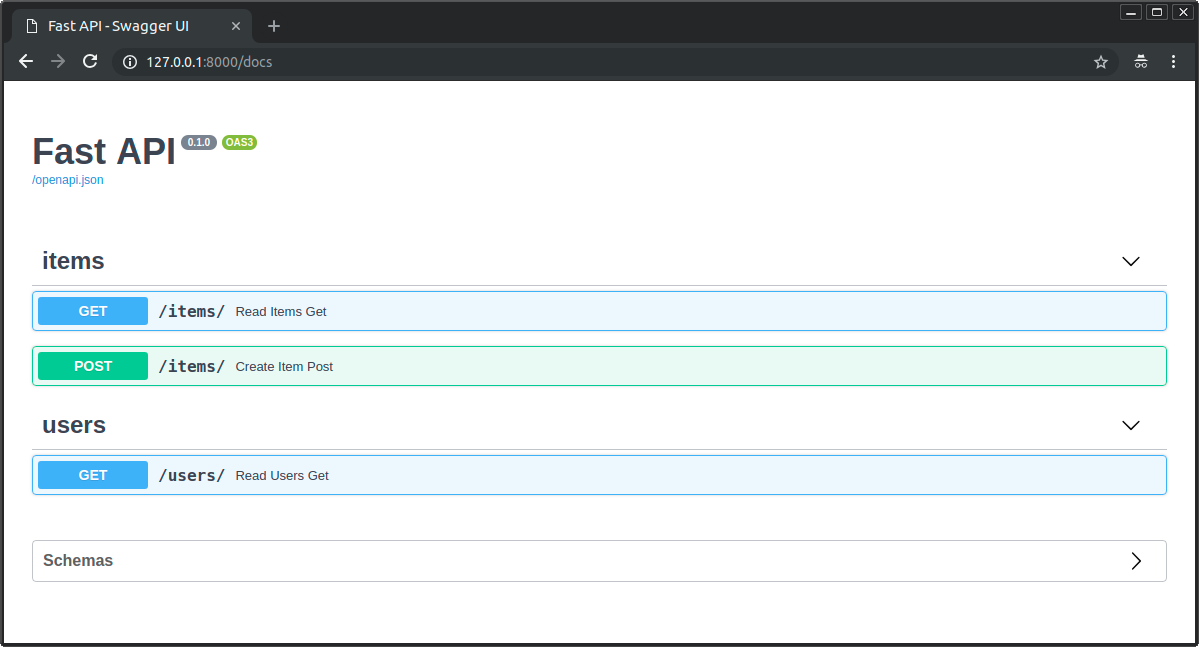
Они будут добавлены в схему OpenAPI и будут использованы в автоматической документации интерфейса:
Теги с перечислениями
Если у вас большое приложение, вы можете прийти к необходимости добавить несколько тегов, и возможно, вы захотите убедиться в том, что всегда используете один и тот же тег для связанных операций пути.
В этих случаях, имеет смысл хранить теги в классе Enum.
FastAPI поддерживает это так же, как и в случае с обычными строками:
from enum import Enum

from fastapi import FastAPI

app = FastAPI()


class Tags(Enum):
    items = "items"
    users = "users"


@app.get("/items/", tags=[Tags.items])
async def get_items():
    return ["Portal gun", "Plumbus"]


@app.get("/users/", tags=[Tags.users])
async def read_users():
    return ["Rick", "Morty"]
Краткое и развёрнутое содержание
Вы можете добавить параметры summary и description:
from fastapi import FastAPI
from pydantic import BaseModel

app = FastAPI()


class Item(BaseModel):
    name: str
    description: str | None = None
    price: float
    tax: float | None = None
    tags: set[str] = set()


@app.post(
    "/items/",
    summary="Create an item",
    description="Create an item with all the information, name, description, price, tax and a set of unique tags",
)
async def create_item(item: Item) -> Item:
    return item
🤓 Other versions and variants
from typing import Union

from fastapi import FastAPI
from pydantic import BaseModel

app = FastAPI()


class Item(BaseModel):
    name: str
    description: Union[str, None] = None
    price: float
    tax: Union[float, None] = None
    tags: set[str] = set()


@app.post(
    "/items/",
    summary="Create an item",
    description="Create an item with all the information, name, description, price, tax and a set of unique tags",
)
async def create_item(item: Item) -> Item:
    return item
Описание из строк документации
Так как описания обычно длинные и содержат много строк, вы можете объявить описание операции пути в функции строки документации и FastAPI прочитает её отсюда.
Вы можете использовать Markdown в строке документации, и он будет интерпретирован и отображён корректно (с учетом отступа в строке документации).
from fastapi import FastAPI
from pydantic import BaseModel

app = FastAPI()


class Item(BaseModel):
    name: str
    description: str | None = None
    price: float
    tax: float | None = None
    tags: set[str] = set()


@app.post("/items/", summary="Create an item")
async def create_item(item: Item) -> Item:
    """
    Create an item with all the information:

    - **name**: each item must have a name
    - **description**: a long description
    - **price**: required
    - **tax**: if the item doesn't have tax, you can omit this
    - **tags**: a set of unique tag strings for this item
    """
    return item
🤓 Other versions and variants
from typing import Union

from fastapi import FastAPI
from pydantic import BaseModel

app = FastAPI()


class Item(BaseModel):
    name: str
    description: Union[str, None] = None
    price: float
    tax: Union[float, None] = None
    tags: set[str] = set()


@app.post("/items/", summary="Create an item")
async def create_item(item: Item) -> Item:
    """
    Create an item with all the information:

    - **name**: each item must have a name
    - **description**: a long description
    - **price**: required
    - **tax**: if the item doesn't have tax, you can omit this
    - **tags**: a set of unique tag strings for this item
    """
    return item
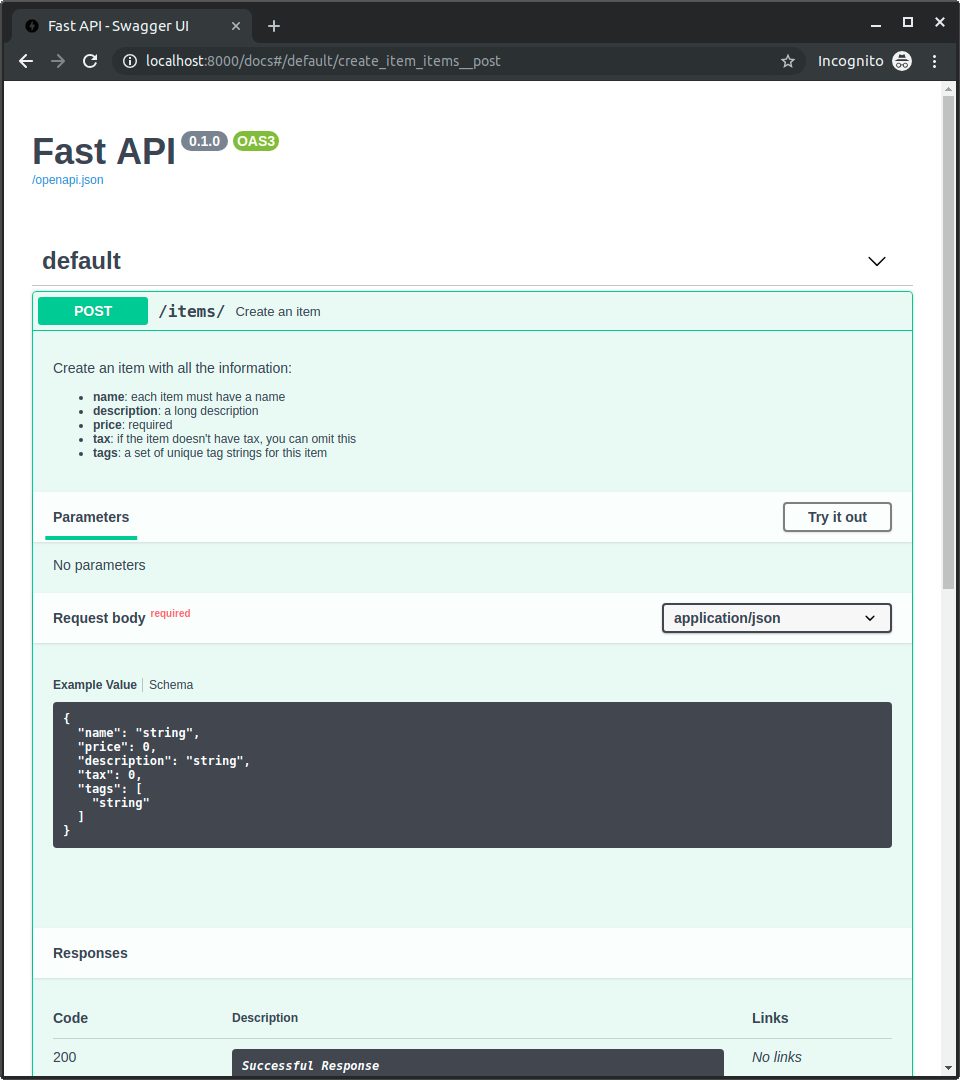
Он будет использован в интерактивной документации:
Описание ответа
Вы можете указать описание ответа с помощью параметра response_description:
from fastapi import FastAPI
from pydantic import BaseModel

app = FastAPI()


class Item(BaseModel):
    name: str
    description: str | None = None
    price: float
    tax: float | None = None
    tags: set[str] = set()


@app.post(
    "/items/",
    summary="Create an item",
    response_description="The created item",
)
async def create_item(item: Item) -> Item:
    """
    Create an item with all the information:

    - **name**: each item must have a name
    - **description**: a long description
    - **price**: required
    - **tax**: if the item doesn't have tax, you can omit this
    - **tags**: a set of unique tag strings for this item
    """
    return item
🤓 Other versions and variants
from typing import Union

from fastapi import FastAPI
from pydantic import BaseModel

app = FastAPI()


class Item(BaseModel):
    name: str
    description: Union[str, None] = None
    price: float
    tax: Union[float, None] = None
    tags: set[str] = set()


@app.post(
    "/items/",
    summary="Create an item",
    response_description="The created item",
)
async def create_item(item: Item) -> Item:
    """
    Create an item with all the information:

    - **name**: each item must have a name
    - **description**: a long description
    - **price**: required
    - **tax**: if the item doesn't have tax, you can omit this
    - **tags**: a set of unique tag strings for this item
    """
    return item
Дополнительная информация
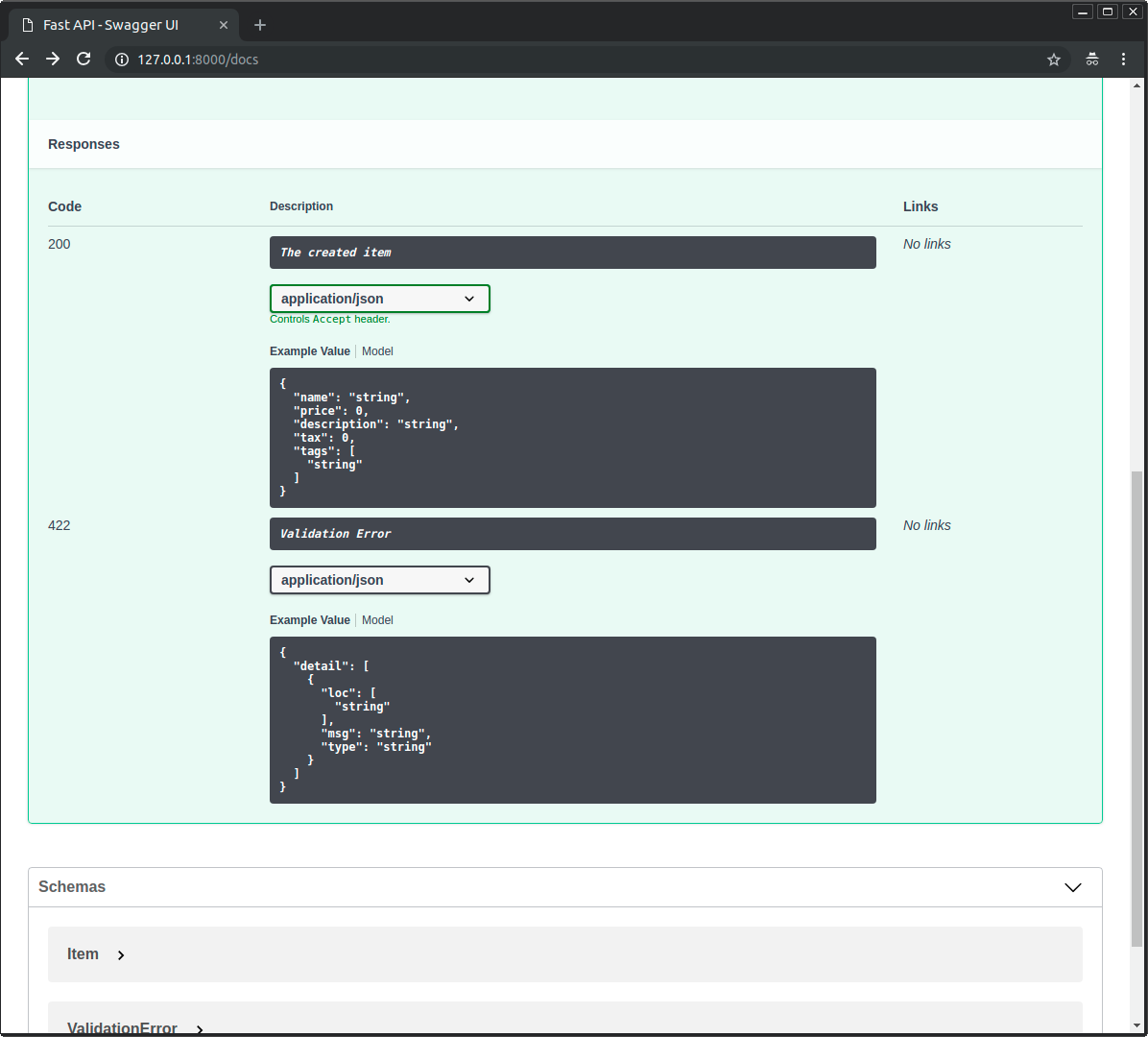
Помните, что response_description относится конкретно к ответу, а description относится к операции пути в целом.
Check
OpenAPI указывает, что каждой операции пути необходимо описание ответа.
Если вдруг вы не укажете его, то FastAPI автоматически сгенерирует это описание с текстом "Successful response".
Обозначение операции пути как устаревшей
Если вам необходимо пометить операцию пути как устаревшую, при этом не удаляя её, передайте параметр deprecated:
from fastapi import FastAPI

app = FastAPI()


@app.get("/items/", tags=["items"])
async def read_items():
    return [{"name": "Foo", "price": 42}]


@app.get("/users/", tags=["users"])
async def read_users():
    return [{"username": "johndoe"}]


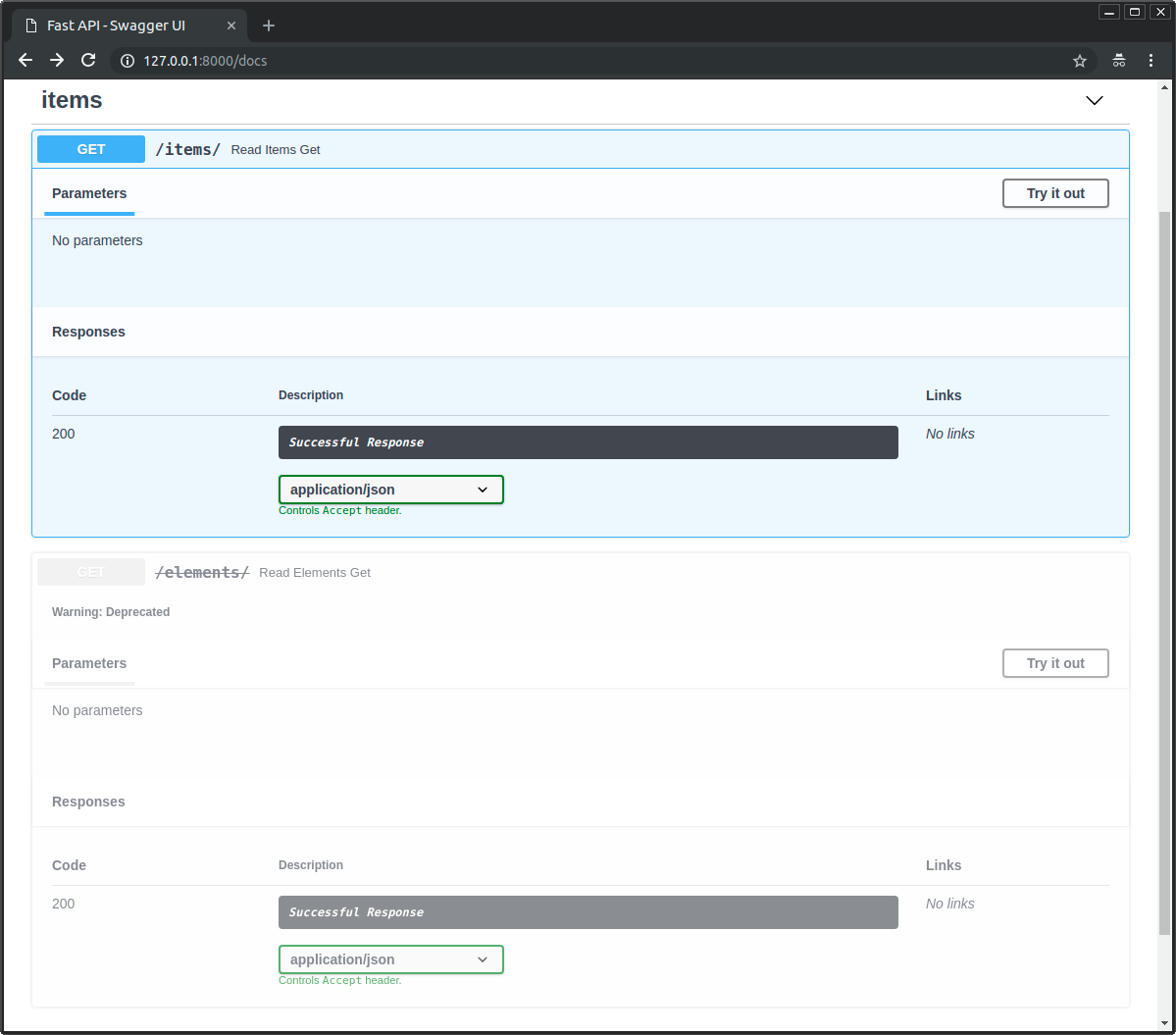
@app.get("/elements/", tags=["items"], deprecated=True)
async def read_elements():
    return [{"item_id": "Foo"}]
Он будет четко помечен как устаревший в интерактивной документации:
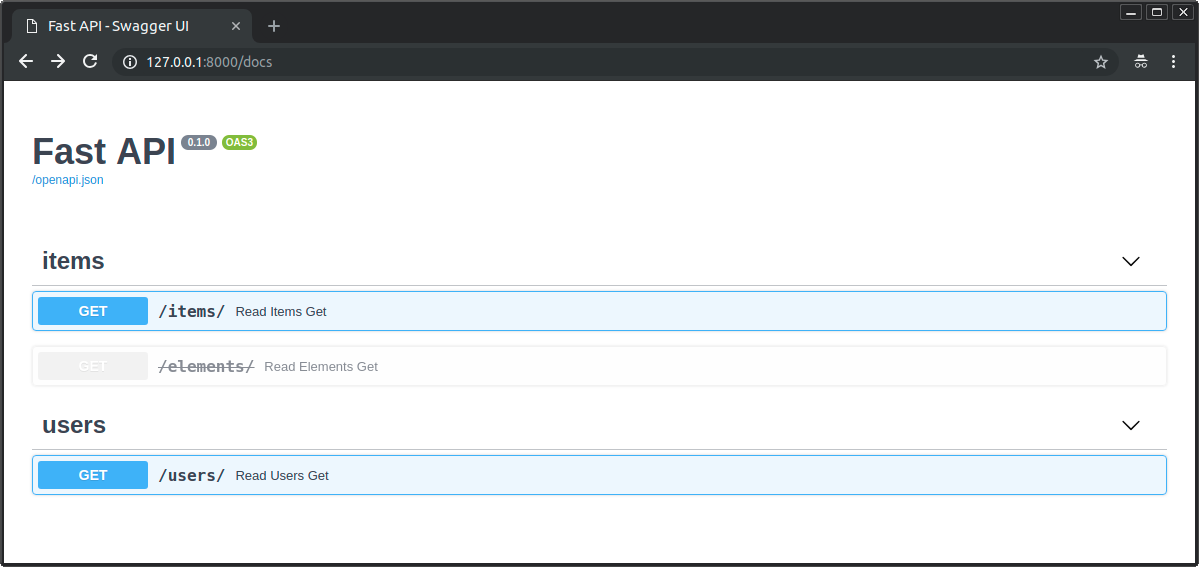
Проверьте, как будут выглядеть устаревшие и не устаревшие операции пути:
Резюме
Вы можете легко конфигурировать и добавлять метаданные в ваши операции пути, передавая параметры декораторам операций пути.